

Polish Bishop Convicted for Failing to Report Child Sexual Abuse: Could ROCOR Bishops Face Similar Scrutiny in the Matthew Williams Case?

Author: Staff
Date Published: 11/01/2026
Publication: Pokrov Truth

Reporting failures often enable abuse to continue.

Polish diocese to appeal bishop's conviction over abuse reporting

A landmark court ruling in Poland has raised important questions about the legal accountability of bishops who fail to promptly report allegations of child sexual abuse to civil authorities. The case also bears striking similarities to the ongoing controversy surrounding the Russian Orthodox Church Outside of Russia (ROCOR) and its handling of allegations against American priest Matthew Williams.

On 29 October 2026, a Polish court convicted Roman Catholic Bishop Andrzej Jeż of Tarnów for failing to promptly notify law enforcement authorities about allegations of child sexual abuse involving two priests under his jurisdiction. It was reportedly the first conviction of its kind involving a Catholic bishop in Poland.

The allegations involved two priests, one of whom investigators concluded had abused at least 95 children over several decades. Prosecutors argued that Bishop Jeż had delayed notifying authorities despite the Church having possessed information about the allegations for years. The court found him guilty under Polish legislation requiring the immediate reporting of credible information concerning certain sexual offences against minors.

Rather than imprisonment, the bishop was ordered to donate 25% of his earnings for two years to a child protection charity and pay an additional 20,000 zloty into a victims’ assistance fund. Bishop Jeż denied wrongdoing, and his diocese announced its intention to appeal the verdict.

https://notesfrompoland.com/2026/10/29/polish-bishop-convicted-for-failing-to-promptly-report-child-sex-abuse-allegations/

The Parallels with ROCOR’s Matthew Williams Case

Suspended ROCOR priest Matthew Williams is facing child sexual abuse charges in Virginia & Tennessee.

The Polish conviction raises troubling questions about the handling of the Matthew Williams case by ROCOR’s Eastern American Diocese, headed by Metropolitan Nicholas (Olhovsky).

As documented in a detailed investigation published by Pokrov Truth last year, allegations that Archpriest Matthew Williams had sexually abused his own children were reportedly communicated to senior ROCOR clergy as early as September 2024.

According to the published chronology, Metropolitan Nicholas was informed of the allegations through Archpriest Serge Kotar in September 2024 and subsequently received a detailed written complaint from Williams’ wife, Elizabeth, on 30 October 2024. Bishop Luke (Murianka), another senior hierarch of the diocese, also became involved in December 2024.

Williams was only suspended from his parish duties on 10 December 2024, a delay of 3 months! However, it was not until May 2025 that he was criminally charged in Virginia with serious sexual offences involving a minor.

ROCOR clerics Fr Serge Kotar, Bishop Luke (Murianka) and Metropolitan Nicholas (Olhovsky). Who knew what & when did they report to police?

Could ROCOR’s Bishops Face Legal Consequences?

The similarities between the Polish and American cases warrant serious examination. Both involve allegations of child sexual abuse by priests, information reportedly reaching senior bishops, and questions about whether Church authorities fulfilled their responsibilities to report suspected crimes promptly.

In the United States, child abuse reporting requirements vary between states. Tennessee imposes reporting obligations on all persons, while Virginia specifically includes clergy among mandatory reporters, subject to certain exceptions. Virginia law generally requires covered individuals to report suspected abuse within 24 hours.

A Comparable American Case: Bishop Robert Finn — Kansas City, Missouri (2012)

In September 2012, Bishop Finn was convicted of a misdemeanor for failing to report suspected child abuse involving Fr Shawn Ratigan.
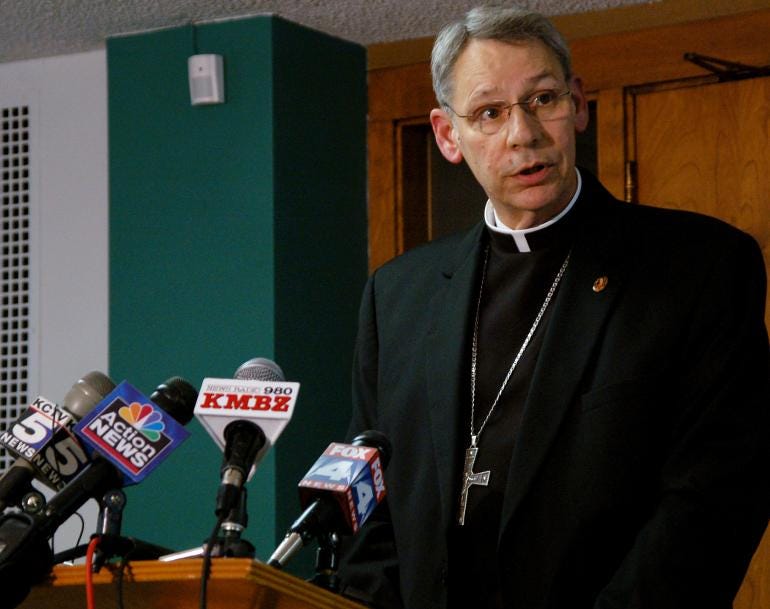
Bishop admits failure in priest's child pornography case | National Catholic Reporter

Diocesan officials had discovered evidence involving sexual images of children, but authorities were not promptly informed. Finn received a two-year probationary sentence. The court also imposed conditions involving safeguarding training and reporting procedures.

The prosecution was historically significant because it demonstrated that a bishop could be held personally criminally accountable for failing to report suspected abuse committed by a subordinate priest.

https://www.theguardian.com/us-news/2015/apr/21/catholic-bishop-resigns-protecting-priest-sex-abuse-kansas

ROCOR’s Eastern American Diocese Liability?

This raises a potentially significant legal question: Did Metropolitan Nicholas, Bishop Luke, or other senior ROCOR clergy possess information that triggered a legal duty to report suspected child sexual abuse, and, if so, did they fulfil that duty within the required timeframe?

Synod of Bishops of the Russian Orthodox Church

The answer would depend on the precise circumstances, including where the information was received, which state’s laws applied, whether an appropriate report had already been made, and whether any legal exceptions existed.

Nevertheless, the Polish ruling demonstrates that bishops are not necessarily immune from criminal accountability when they fail to report suspected abuse. The allegations surrounding Matthew Williams deserve similar scrutiny.

With Williams facing criminal proceedings in Virginia and Tennessee, the question of what ROCOR’s bishops knew, when they knew it, and what they did with that information remains critically important. Whether any failure by ROCOR officials to report suspected abuse occurred, and whether it amounted to a breach of the law, are questions that could be tested in court if the relevant evidence and legal proceedings bring them into issue.

With Williams facing criminal proceedings in Virginia and Tennessee, the question of what ROCOR’s bishops knew, when they knew it, and what they did with that information remains critically important.

Matthew Williams Must Be Defrocked Immediately

There can be no justification for ROCOR continuing to allow Archpriest Matthew Williams to retain his holy orders indefinitely while the American criminal justice system slowly works its way through the serious charges against him. With proceedings in Virginia and Tennessee potentially taking years to conclude, the Church must recognize that its own ecclesiastical responsibility is entirely separate from the question of criminal conviction. ROCOR does not need to wait for a civil court verdict before determining whether Williams is fit to remain a priest. The evidence already made public, including reported admissions by Williams himself, provides compelling grounds for immediate ecclesiastical proceedings aimed at his permanent removal from the priesthood. The continued recognition of Williams as a priest, even under suspension, is an affront to his alleged victims and to all survivors of clerical child sexual abuse. It also represents a public relations disaster for ROCOR, reinforcing the perception of a weak and indecisive hierarchy that is more concerned with protecting the clerical status of an accused abuser than demonstrating genuine accountability.

ROCOR does not need to wait for a civil court verdict before determining whether Williams is fit to remain a priest. The evidence already made public, including reported admissions by Williams himself, provides compelling grounds for immediate ecclesiastical proceedings aimed at his permanent removal from the priesthood.

At a time when churches throughout the world are expected to implement and rigorously enforce strict child safeguarding policies, ROCOR’s apparent reluctance to take decisive disciplinary action sends precisely the wrong message. Metropolitan Nicholas and the ROCOR Synod must act without further delay to initiate proceedings for Williams’ defrocking. Anything less risks confirming the deeply damaging impression that ROCOR has still not grasped the seriousness of clerical child sexual abuse or its fundamental obligation to protect children and uphold the integrity of the priesthood.

The fundamental principle is straightforward: protecting children and reporting suspected sexual abuse to the appropriate authorities must take precedence over protecting the reputation of any Church or its clergy.

Share